设计自己的线程局部存储
(1)自动管理它所保存的指针所指向的内存单元的分配和释放。这样做,一方面大大方
便了用户使用,另一方面,在一个线程不使用线程局部变量的情况下,管理系统可以决定不为
这个线程分配内存,从而节省内存空间。
(2)允许用户申请使用任意多个TLS索引。Microsoft确保每个进程的位数组中至少有TLS_MINIMUM_AVAILABLE个位标志是可用的。在WinNTh文件中这个值被定义为64,Windows 2000又做了扩展,使至少1000个标志可用。
新的TLS主要由4个类组成
CSimpleList类负责实现简单的链表功能,把各线程私有数据连在一起,以便能够释放它们占用的内存;
CNoTrackObject类重载了new和delete操作符,负责为线程私有数据分配内存空间;
CThreadSlotData类是整个系统的核心,它负责分配索引和存取线程私有数据;
CThreadLocal是最终提供给用户使用的类模板,它负责为用户提供友好的接口函数。
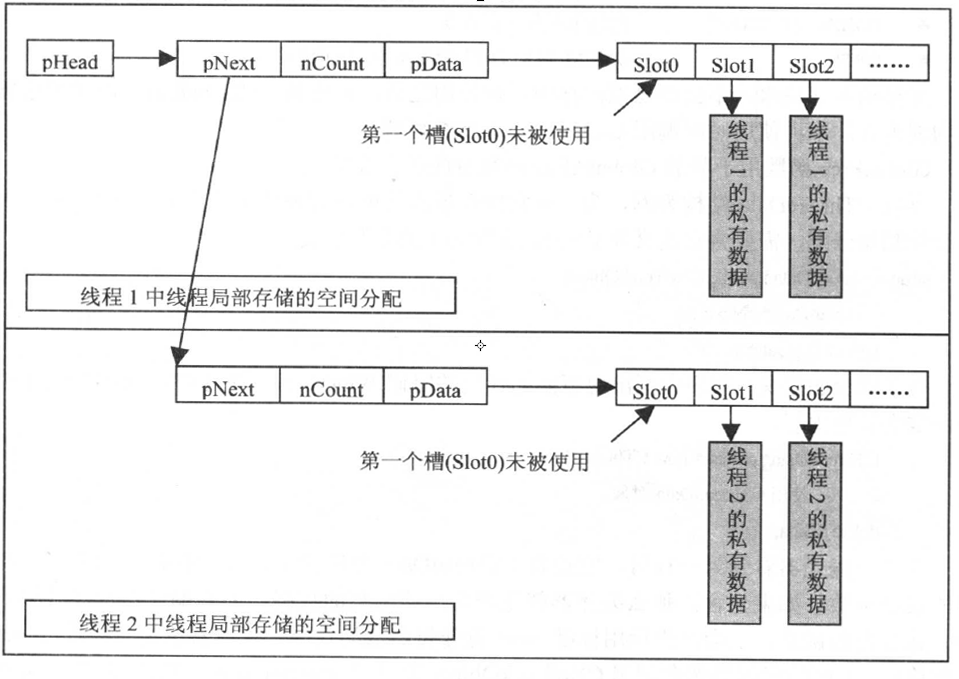
线程的私有数据是自己自定义的结构或类,需要继承CNoTrackObject类
一个存放线程私有数据的数据结构CThreadData
1
2
3
4
5
6
7
8
9
10
11
12
13
14
15
16
17
18
19
20
21
22
23
24
25
26
27
28
29
30
31
32
33
34
35
36
37
38
39
40
41
42
43
44
45
46
47
48
49
50
51
52
53
54
55
56
57
58
59
60
61
62
63
64
65
66
67
68
69
70
71
72
73
74
75
76
77
78
79
80
81
82
83
84
85
86
87
88
89
90
91
92
93
94
95
96
97
98
99
100
101
102
103
104
105
106
107
108
109
110
111
112
113
114
115
116
117
118
119
120
121
122
123
124
125
126
127
128
129
130
131
132
133
134
135
136
137
138
139
140
141
142
143
144
145
146
147
148
149
150
151
152
153
154
155
156
157
158
159
160
161
162
163
164
165
166
167
168
169
170
171
172
173
174
175
176
177
178
179
180
181
182
183
184
185
186
187
188
189
190
191
192
193
194
195
196
197
198
199
200
201
202
203
204
205
206
207
208
|
#ifndef __AFXTLS_H__
#define __AFXTLS_H__
#include <windows.h>
#include <stddef.h>
class CNoTrackObject;
class CSimpleList
{
public:
CSimpleList(int nNextOffset = 0);
void Construct(int nNextOffset);
BOOL IsEmpty() const;
void AddHead(void* p);
void RemoveAll();
void* GetHead() const;
void* GetNext(void* p) const;
BOOL Remove(void* p);
void* m_pHead;
size_t m_nNextOffset;
void** GetNextPtr(void* p) const;
};
inline CSimpleList::CSimpleList(int nNextOffset)
{ m_pHead = NULL; m_nNextOffset = nNextOffset; }
inline void CSimpleList::Construct(int nNextOffset)
{ m_nNextOffset = nNextOffset; }
inline BOOL CSimpleList::IsEmpty() const
{ return m_pHead == NULL; }
inline void CSimpleList::RemoveAll()
{ m_pHead = NULL; }
inline void* CSimpleList::GetHead() const
{ return m_pHead; }
inline void* CSimpleList::GetNext(void* preElement) const
{ return *GetNextPtr(preElement); }
inline void** CSimpleList::GetNextPtr(void* p) const
{ return (void**)((BYTE*)p + m_nNextOffset); }
template<class TYPE>
class CTypedSimpleList : public CSimpleList
{
public:
CTypedSimpleList(int nNextOffset = 0)
: CSimpleList(nNextOffset) { }
void AddHead(TYPE p)
{ CSimpleList::AddHead((void*)p); }
TYPE GetHead()
{ return (TYPE)CSimpleList::GetHead(); }
TYPE GetNext(TYPE p)
{ return (TYPE)CSimpleList::GetNext(p); }
BOOL Remove(TYPE p)
{ return CSimpleList::Remove(p); }
operator TYPE()
{ return (TYPE)CSimpleList::GetHead(); }
};
class CNoTrackObject
{
public:
void* operator new(size_t nSize);
void operator delete(void*);
virtual ~CNoTrackObject() { }
};
#pragma warning(disable : 4291)
struct CSlotData;
struct CThreadData;
class CThreadSlotData
{
public:
CThreadSlotData();
int AllocSlot();
void FreeSlot(int nSlot);
void* GetThreadValue(int nSlot);
void SetValue(int nSlot, void* pValue);
void DeleteValues(HINSTANCE hInst, BOOL bAll = FALSE);
DWORD m_tlsIndex;
int m_nAlloc;
int m_nRover;
int m_nMax;
CSlotData* m_pSlotData;
CTypedSimpleList<CThreadData*> m_list;
CRITICAL_SECTION m_cs;
void* operator new(size_t, void* p)
{ return p; }
void DeleteValues(CThreadData* pData, HINSTANCE hInst);
~CThreadSlotData();
};
class CThreadLocalObject
{
public:
CNoTrackObject* GetData(CNoTrackObject* (*pfnCreateObject)());
CNoTrackObject* GetDataNA();
DWORD m_nSlot;
~CThreadLocalObject();
};
template<class TYPE>
class CThreadLocal : public CThreadLocalObject
{
public:
TYPE* GetData()
{
TYPE* pData = (TYPE*)CThreadLocalObject::GetData(&CreateObject);
return pData;
}
TYPE* GetDataNA()
{
TYPE* pData = (TYPE*)CThreadLocalObject::GetDataNA();
return pData;
}
operator TYPE*()
{ return GetData(); }
TYPE* operator->()
{ return GetData(); }
public:
static CNoTrackObject* CreateObject()
{ return new TYPE; }
};
#define THREAD_LOCAL(cla.ss_name, ident_name) \
CThreadLocal<class_name> ident_name;
#define EXTERN_THREAD_LOCAL(class_name, ident_name) \
extern THREAD_LOCAL(class_name, ident_name)
#endif
|
1
2
3
4
5
6
7
8
9
10
11
12
13
14
15
16
17
18
19
20
21
22
23
24
25
26
27
28
29
30
31
32
33
34
35
36
37
38
39
40
41
42
43
44
45
46
47
48
49
50
51
52
53
54
55
56
57
58
59
60
61
62
63
64
65
66
67
68
69
70
71
72
73
74
75
76
77
78
79
80
81
82
83
84
85
86
87
88
89
90
91
92
93
94
95
96
97
98
99
100
101
102
103
104
105
106
107
108
109
110
111
112
113
114
115
116
117
118
119
120
121
122
123
124
125
126
127
128
129
130
131
132
133
134
135
136
137
138
139
140
141
142
143
144
145
146
147
148
149
150
151
152
153
154
155
156
157
158
159
160
161
162
163
164
165
166
167
168
169
170
171
172
173
174
175
176
177
178
179
180
181
182
183
184
185
186
187
188
189
190
191
192
193
194
195
196
197
198
199
200
201
202
203
204
205
206
207
208
209
210
211
212
213
214
215
216
217
218
219
220
221
222
223
224
225
226
227
228
229
230
231
232
233
234
235
236
237
238
239
240
241
242
243
244
245
246
247
248
249
250
251
252
253
254
255
256
257
258
259
260
261
262
263
264
265
266
267
268
269
270
271
272
273
274
275
276
277
278
279
280
281
282
283
284
285
286
287
288
289
290
291
292
293
294
295
296
297
298
299
300
301
302
303
304
305
306
307
308
309
310
311
312
313
314
315
316
317
318
319
320
321
322
323
324
325
326
327
328
329
330
331
332
333
334
335
336
337
338
339
340
341
|
#include "_AFXTLS_.H"
void CSimpleList::AddHead(void* p)
{
*GetNextPtr(p) = m_pHead;
m_pHead = p;
}
BOOL CSimpleList::Remove(void* p)
{
if(p == NULL)
return FALSE;
BOOL bResult = FALSE;
if(p == m_pHead)
{
m_pHead = *GetNextPtr(p);
bResult = TRUE;
}
else
{
void* pTest = m_pHead;
while(pTest != NULL && *GetNextPtr(pTest) != p)
pTest = *GetNextPtr(pTest);
if(pTest != NULL)
{
*GetNextPtr(pTest) = *GetNextPtr(p);
bResult = TRUE;
}
}
return bResult;
}
BYTE __afxThreadData[sizeof(CThreadSlotData)];
CThreadSlotData* _afxThreadData;
struct CSlotData
{
DWORD dwFlags;
HINSTANCE hInst;
};
struct CThreadData : public CNoTrackObject
{
CThreadData* pNext;
int nCount;
LPVOID* pData;
};
#define SLOT_USED 0x01
CThreadSlotData::CThreadSlotData()
{
m_list.Construct(offsetof(CThreadData, pNext));
m_nMax = 0;
m_nAlloc = 0;
m_nRover = 1;
m_pSlotData = NULL;
m_tlsIndex = ::TlsAlloc();
::InitializeCriticalSection(&m_cs);
}
int CThreadSlotData::AllocSlot()
{
::EnterCriticalSection(&m_cs);
int nAlloc = m_nAlloc;
int nSlot = m_nRover;
if(nSlot >= nAlloc || m_pSlotData[nSlot].dwFlags & SLOT_USED)
{
for(nSlot = 1; nSlot < nAlloc && m_pSlotData[nSlot].dwFlags & SLOT_USED; nSlot ++) ;
if(nSlot >= nAlloc)
{
int nNewAlloc = nAlloc + 32;
HGLOBAL hSlotData;
if(m_pSlotData == NULL)
{
hSlotData = ::GlobalAlloc(GMEM_MOVEABLE, nNewAlloc*sizeof(CSlotData));
}
else
{
hSlotData = ::GlobalHandle(m_pSlotData);
::GlobalUnlock(hSlotData);
hSlotData = ::GlobalReAlloc(hSlotData,
nNewAlloc*sizeof(CSlotData), GMEM_MOVEABLE);
}
CSlotData* pSlotData = (CSlotData*)::GlobalLock(hSlotData);
memset(pSlotData + m_nAlloc, 0, (nNewAlloc - nAlloc)*sizeof(CSlotData));
m_nAlloc = nNewAlloc;
m_pSlotData = pSlotData;
}
}
if(nSlot >= m_nMax)
m_nMax = nSlot + 1;
m_pSlotData[nSlot].dwFlags |= SLOT_USED;
m_nRover = nSlot + 1;
::LeaveCriticalSection(&m_cs);
return nSlot;
}
void CThreadSlotData::FreeSlot(int nSlot)
{
::EnterCriticalSection(&m_cs);
CThreadData* pData = m_list;
while(pData != NULL)
{
if(nSlot < pData->nCount)
{
delete (CNoTrackObject*)pData->pData[nSlot];
pData->pData[nSlot] = NULL;
}
pData = pData->pNext;
}
m_pSlotData[nSlot].dwFlags &= ~SLOT_USED;
::LeaveCriticalSection(&m_cs);
}
inline void* CThreadSlotData::GetThreadValue(int nSlot)
{
CThreadData* pData = (CThreadData*)::TlsGetValue(m_tlsIndex);
if(pData == NULL || nSlot >= pData->nCount)
return NULL;
return pData->pData[nSlot];
}
void CThreadSlotData::SetValue(int nSlot, void* pValue)
{
CThreadData* pData = (CThreadData*)::TlsGetValue(m_tlsIndex);
if((pData == NULL || nSlot >= pData->nCount) && pValue != NULL)
{
if(pData == NULL)
{
pData = new CThreadData;
pData->nCount = 0;
pData->pData = NULL;
::EnterCriticalSection(&m_cs);
m_list.AddHead(pData);
::LeaveCriticalSection(&m_cs);
}
if(pData->pData == NULL)
pData->pData = (void**)::GlobalAlloc(LMEM_FIXED, m_nMax*sizeof(LPVOID));
else
pData->pData = (void**)::GlobalReAlloc(pData->pData, m_nMax*sizeof(LPVOID), LMEM_MOVEABLE);
memset(pData->pData + pData->nCount, 0,
(m_nMax - pData->nCount) * sizeof(LPVOID));
pData->nCount = m_nMax;
::TlsSetValue(m_tlsIndex, pData);
}
pData->pData[nSlot] = pValue;
}
void CThreadSlotData::DeleteValues(HINSTANCE hInst, BOOL bAll)
{
::EnterCriticalSection(&m_cs);
if(!bAll)
{
CThreadData* pData = (CThreadData*)::TlsGetValue(m_tlsIndex);
if(pData != NULL)
DeleteValues(pData, hInst);
}
else
{
CThreadData* pData = m_list.GetHead();
while(pData != NULL)
{
CThreadData* pNextData = pData->pNext;
DeleteValues(pData, hInst);
pData = pNextData;
}
}
::LeaveCriticalSection(&m_cs);
}
void CThreadSlotData::DeleteValues(CThreadData* pData, HINSTANCE hInst)
{
BOOL bDelete = TRUE;
for(int i=1; i<pData->nCount; i++)
{
if(hInst == NULL || m_pSlotData[i].hInst == hInst)
{
delete (CNoTrackObject*)pData->pData[i];
pData->pData[i] = NULL;
}
else
{
if(pData->pData[i] != NULL)
bDelete = FALSE;
}
}
if(bDelete)
{
::EnterCriticalSection(&m_cs);
m_list.Remove(pData);
::LeaveCriticalSection(&m_cs);
::LocalFree(pData->pData);
delete pData;
::TlsSetValue(m_tlsIndex, NULL);
}
}
CThreadSlotData::~CThreadSlotData()
{
CThreadData *pData = m_list;
while(pData != NULL)
{
CThreadData* pDataNext = pData->pNext;
DeleteValues(pData, NULL);
pData = pData->pNext;
}
if(m_tlsIndex != (DWORD)-1)
::TlsFree(m_tlsIndex);
if(m_pSlotData != NULL)
{
HGLOBAL hSlotData = ::GlobalHandle(m_pSlotData);
::GlobalUnlock(hSlotData);
::GlobalFree(m_pSlotData);
}
::DeleteCriticalSection(&m_cs);
}
void* CNoTrackObject::operator new(size_t nSize)
{
void* p = ::GlobalAlloc(GPTR, nSize);
return p;
}
void CNoTrackObject::operator delete(void* p)
{
if(p != NULL)
::GlobalFree(p);
}
CNoTrackObject* CThreadLocalObject::GetData(CNoTrackObject* (*pfnCreateObject)())
{
if(m_nSlot == 0)
{
if(_afxThreadData == NULL)
_afxThreadData = new(__afxThreadData) CThreadSlotData;
m_nSlot = _afxThreadData->AllocSlot();
}
CNoTrackObject* pValue = (CNoTrackObject*)_afxThreadData->GetThreadValue(m_nSlot);
if(pValue == NULL)
{
pValue = (*pfnCreateObject)();
_afxThreadData->SetValue(m_nSlot, pValue);
}
return pValue;
}
CNoTrackObject* CThreadLocalObject::GetDataNA()
{
if(m_nSlot == 0 || _afxThreadData == 0)
return NULL;
return (CNoTrackObject*)_afxThreadData->GetThreadValue(m_nSlot);
}
CThreadLocalObject::~CThreadLocalObject()
{
if(m_nSlot != 0 && _afxThreadData != NULL)
_afxThreadData->FreeSlot(m_nSlot);
m_nSlot = 0;
}
|