引用的基本概念
给变量起别名
规则
1 引用没有定义,是一种关系型声明。声明它和原有某一变量(实体)的关
系。故 而类型与原类型保持一致,且不分配内存。与被引用的变量有相同的地
址。
1
2
3
4
5
6
7
8
9
10
11
12
13
14
15
| #include<iostream>
using namespace std;
int main(int argc, char* argv[])
{
int a = 100;
int & re = a;
cout << "&a = " << &a << endl;
cout << "&re = " << &re << endl;
return 0;
}
|
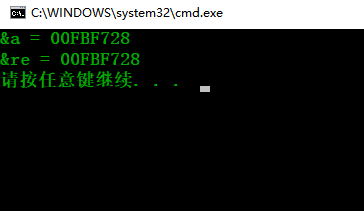
2 声明的时候必须初始化,一经声明,不可变更。
1
2
3
4
5
6
7
8
9
10
11
12
13
| #include<iostream>
using namespace std;
int main(int argc, char* argv[])
{
int a = 100;
int &re = a;
cout << re << endl;
return 0;
}
|
3 可对引用,再次引用。多次引用的结果,是某一变量具有多个别名。
1
2
3
4
5
6
7
8
9
10
11
12
13
14
15
16
17
18
| #include<iostream>
using namespace std;
int main(int argc, char* argv[])
{
int a = 100;
int &re = a;
int &re2 = re;
cout << re << endl;
cout << re2 << endl;
cout << &a << endl;
cout << &re << endl;
cout << &re2 << endl;
return 0;
}
|
4 &符号前有数据类型时,是引用。其它皆为取地址。
引用做函数参数或函数返回值
1
2
3
4
5
6
7
8
9
10
11
12
13
14
15
16
17
18
19
20
21
22
23
24
25
26
27
28
29
30
31
32
33
34
35
36
37
38
39
40
41
42
43
44
45
46
47
| #include<iostream>
using namespace std;
typedef struct student
{
char name[50];
float score;
int sex;
}Student;
int my_swap(int &a, int &b)
{
int tem = a;
a = b;
b = tem;
return 0;
}
Student & my_print(Student &a)
{
cout << a.name << endl;
cout << a.score << endl;
cout << a.sex << endl;
return a;
}
int main(int argc, char* argv[])
{
Student XiaoMing = { "XiaoMing",100.0f,1 };
int a = 100, b = 90;
cout << "a = " << a << endl;
cout << "b = " << b << endl;
cout << "--------------------------------" << endl;
my_swap(a, b);
my_print(XiaoMing);
cout << "--------------------------------" << endl;
cout << "a = " << a << endl;
cout << "b = " << b << endl;
return 0;
}
|