1 互斥锁
1.1互斥锁的使用步骤
-
第1步:创建一把互斥锁
-
初始化互斥锁
pthread_mutex_init(&mutex);—相当于mutex=1
-
在代码中寻找共享资源(也称为临界区)
pthread_mutex_lock(&mutex); -- mutex = 0
-
临界区代码
pthread_mutex_unlock(&mutex); -- mutex = 1
-
释放互斥锁资源
pthread_mutex_destroy(&mutex);
注意:必须在所有操作共享资源的线程上都加上锁否则不能起到同步的效果
1.2 练习
1 定义一把互斥锁,应该为一全局变量
pthread_mutex_t mutex;
2 在main函数中对mutex进行初始化
pthread_mutex_init(&mutex, NULL);
3 创建两个线程,在两个线程中加锁和解锁
4 主线程释放互斥锁资源
pthread_mutex_destroy(&mutex);
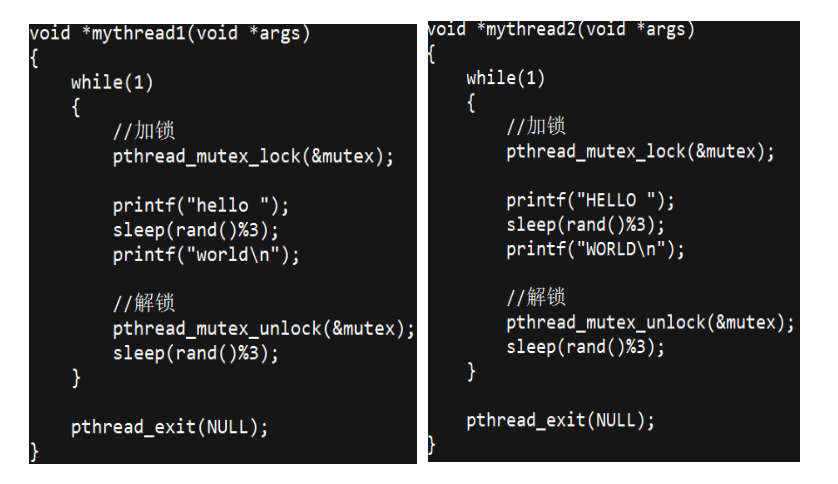
1
2
3
4
5
6
7
8
9
10
11
12
13
14
15
16
17
18
19
20
21
22
23
24
25
26
27
28
29
30
31
32
33
34
35
36
37
38
39
40
41
42
43
44
45
46
47
48
49
50
51
52
53
54
55
56
57
58
59
60
61
62
63
64
65
66
67
68
69
70
71
72
73
74
75
76
77
78
79
80
81
82
83
84
| #include <stdio.h>
#include <stdlib.h>
#include <string.h>
#include <sys/types.h>
#include <unistd.h>
#include <pthread.h>
#include <time.h>
pthread_mutex_t mutex;
void *mythread1(void *args)
{
while(1)
{
pthread_mutex_lock(&mutex);
printf("hello ");
sleep(rand()%3);
printf("world\n");
pthread_mutex_unlock(&mutex);
sleep(rand()%3);
}
pthread_exit(NULL);
}
void *mythread2(void *args)
{
while(1)
{
pthread_mutex_lock(&mutex);
printf("HELLO ");
sleep(rand()%3);
printf("WORLD\n");
pthread_mutex_unlock(&mutex);
sleep(rand()%3);
}
pthread_exit(NULL);
}
int main()
{
int ret;
pthread_t thread1;
pthread_t thread2;
srand(time(NULL));
pthread_mutex_init(&mutex, NULL);
ret = pthread_create(&thread1, NULL, mythread1, NULL);
if(ret!=0)
{
printf("pthread_create error, [%s]\n", strerror(ret));
return -1;
}
ret = pthread_create(&thread2, NULL, mythread2, NULL);
if(ret!=0)
{
printf("pthread_create error, [%s]\n", strerror(ret));
return -1;
}
pthread_join(thread1, NULL);
pthread_join(thread2, NULL);
pthread_mutex_destroy(&mutex);
return 0;
}
|
1.3 死锁
死锁并不是linux提供给用户的一种使用方法,而是由于用户使用互斥锁不当引起的一种现象。
- 常见的死锁有两种:
- 第一种:自己锁自己,如下图代码片段
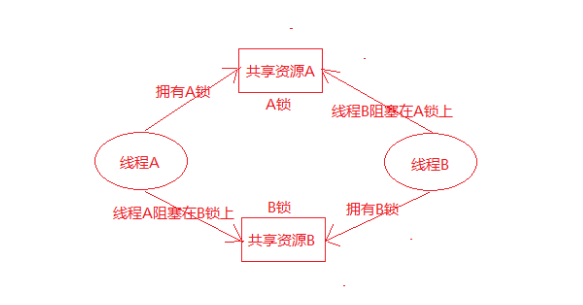
- 第二种 线程A拥有A锁,请求获得B锁;线程B拥有B锁,请求获得A锁,这样造成线程A和线程B都不释放自己的锁,而且还想得到对方的锁,从而产生死锁,如下图所示:
- 如何解决死锁:
- 让线程按照一定的顺序去访问共享资源
- 在访问其他锁的时候,需要先将自己的锁解开
- 调用
pthread_mutex_trylock,如果加锁不成功会立刻返回
自己锁自己.
注意点: 线程在异常退出的时候也需要解锁.
A线程占用着A锁, 又想去获得B锁; B线程占用着B锁, 又想去获得A锁,
两个线程都不释放自己的锁, 又想去获得对方的锁, 从而造成了死锁.
解决方法:
1 需要先释放自己的锁再去获得其他锁
2 避免使用嵌套的锁, 让线程按照一定的顺序加锁
3 可以调用pthread_mutex_trylock函数加锁, 该函数不阻塞, 所以不会产生死锁.
2 读写锁
- 什么是读写锁
- 读写锁也叫共享-独占锁。当读写锁以读模式锁住时,它是以共享模式锁住的;当它以写模式锁住时,它是以独占模式锁住的。写独占、读共享。
- 读写锁使用场合
- 读写锁非常适合于对数据结构读的次数远大于写的情况。
- 读写锁特性
- 读写锁是“写模式加锁”时,解锁前,所有对该锁加锁的线程都会被阻塞。
- 读写锁是“读模式加锁”时,如果线程以读模式对其加锁会成功;如果线程以写模式加锁会阻塞。
- 读写锁是“读模式加锁”时, 既有试图以写模式加锁的线程,也有试图以读模式加锁的线程。那么读写锁会阻塞随后的读模式锁请求。优先满足写模式锁。读锁、写锁并行阻塞,写锁优先级高
- 读写锁场景练习:
- 线程A加写锁成功, 线程B请求读锁
- 线程A持有读锁, 线程B请求写锁
- 线程A拥有读锁, 线程B请求读锁
- 线程A持有读锁, 然后线程B请求写锁, 然后线程C请求读锁
- B阻塞,c阻塞 - 写的优先级高
- A解锁,B线程加写锁成功,C继续阻塞
- B解锁,C加读锁成功
- 线程A持有写锁, 然后线程B请求读锁, 然后线程C请求写锁
- BC阻塞
- A解锁,C加写锁成功,B继续阻塞
- C解锁,B加读锁成功
- 读写锁总结
读并行,写独占,当读写同时等待锁的时候写的优先级高
1
2
3
4
5
6
7
8
9
10
11
12
13
14
15
16
17
18
19
20
21
22
23
24
25
26
27
28
29
30
31
32
33
34
35
36
37
38
39
40
41
42
43
44
45
46
47
48
49
50
51
52
53
54
55
56
57
58
59
60
61
62
63
64
65
66
67
68
69
70
71
72
73
74
75
76
77
78
79
80
81
82
83
84
85
86
87
88
89
90
91
92
|
#include <stdio.h>
#include <stdlib.h>
#include <string.h>
#include <sys/types.h>
#include <unistd.h>
#include <pthread.h>
int number = 0;
pthread_rwlock_t rwlock;
void *thread_write(void *arg)
{
int i = *(int *)arg;
int cur;
while(1)
{
pthread_rwlock_wrlock(&rwlock);
cur = number;
cur++;
number = cur;
printf("[%d]-W:[%d]\n", i, cur);
pthread_rwlock_unlock(&rwlock);
sleep(rand()%3);
}
}
void *thread_read(void *arg)
{
int i = *(int *)arg;
int cur;
while(1)
{
pthread_rwlock_rdlock(&rwlock);
cur = number;
printf("[%d]-R:[%d]\n", i, cur);
pthread_rwlock_unlock(&rwlock);
sleep(rand()%3);
}
}
int main()
{
int n = 8;
int i = 0;
int arr[8];
pthread_t thread[8];
pthread_rwlock_init(&rwlock, NULL);
for(i=0; i<3; i++)
{
arr[i] = i;
pthread_create(&thread[i], NULL, thread_write, &arr[i]);
}
for(i=3; i<n; i++)
{
arr[i] = i;
pthread_create(&thread[i], NULL, thread_read, &arr[i]);
}
int j = 0;
for(j=0;j<n; j++)
{
pthread_join(thread[j], NULL);
}
pthread_rwlock_destroy(&rwlock);
return 0;
}
|
3 条件变量
- 条件本身不是锁!但它也可以造成线程阻塞。通常与互斥锁配合使用。给多线程提供一个会合的场所。
- 使用互斥量保护共享数据;
- 使用条件变量可以使线程阻塞, 等待某个条件的发生, 当条件满足的时候解除阻塞.
- 条件变量的两个动作:
- 条件不满足, 阻塞线程
- 条件满足, 通知阻塞的线程解除阻塞, 开始工作.
- 条件变量相关函数
int pthread_cond_init(pthread_cond_t *restrict cond,const pthread_condattr_t *restrict attr);
- 函数描述:初始化条件变量
- 函数参数:
- cond: 条件变量
- attr: 条件变量属性, 通常传NULL
- 函数返回值:成功返回0, 失败返回错误号
int pthread_cond_destroy(pthread_cond_t *cond);
- 函数描述: 销毁条件变量
- 函数参数: 条件变量
- 返回值: 成功返回0, 失败返回错误号
int pthread_cond_wait(pthread_cond_t *restrict cond, pthread_mutex_t *restrict mutex);
- 函数描述: 条件不满足, 引起线程阻塞并解锁;
- 函数参数:
- 函数返回值: 成功返回0, 失败返回错误号
int pthread_cond_signal(pthread_cond_t *cond);
- 函数描述: 唤醒至少一个阻塞在该条件变量上的线程
- 函数参数: 条件变量
- 函数返回值: 成功返回0, 失败返回错误号
pthread_cond_broadcas(pthread_cond_t *cond)
- 唤醒睡眠的线程,一次唤醒所有睡眠的线程
- 函数参数: 条件变量
4 使用条件变量的代码片段
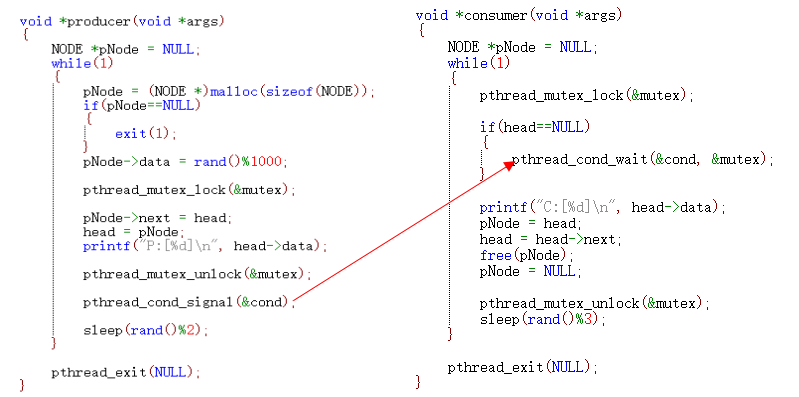
上述代码中,生产者线程调用pthread_cond_signal函数会使消费者线程在pthread_cond_wait处解除阻塞。
1
2
3
4
5
6
7
8
9
10
11
12
13
14
15
16
17
18
19
20
21
22
23
24
25
26
27
28
29
30
31
32
33
34
35
36
37
38
39
40
41
42
43
44
45
46
47
48
49
50
51
52
53
54
55
56
57
58
59
60
61
62
63
64
65
66
67
68
69
70
71
72
73
74
75
76
77
78
79
80
81
82
83
84
85
86
87
88
89
90
91
92
93
94
95
96
97
98
99
100
101
102
103
104
105
106
107
108
109
110
111
112
113
114
115
116
117
118
119
120
121
122
123
124
125
|
#include <stdio.h>
#include <stdlib.h>
#include <string.h>
#include <sys/types.h>
#include <unistd.h>
#include <pthread.h>
typedef struct node
{
int data;
struct node *next;
}NODE;
NODE *head = NULL;
pthread_mutex_t mutex;
pthread_cond_t cond;
void *producer(void *arg)
{
NODE *pNode = NULL;
while(1)
{
pNode = (NODE *)malloc(sizeof(NODE));
if(pNode==NULL)
{
perror("malloc error");
exit(-1);
}
pNode->data = rand()%1000;
printf("P:[%d]\n", pNode->data);
pthread_mutex_lock(&mutex);
pNode->next = head;
head = pNode;
pthread_mutex_unlock(&mutex);
pthread_cond_signal(&cond);
sleep(rand()%3);
}
}
void *consumer(void *arg)
{
NODE *pNode = NULL;
while(1)
{
pthread_mutex_lock(&mutex);
if(head==NULL)
{
pthread_cond_wait(&cond, &mutex);
}
printf("C:[%d]\n", head->data);
pNode = head;
head = head->next;
pthread_mutex_unlock(&mutex);
free(pNode);
pNode = NULL;
sleep(rand()%3);
}
}
int main()
{
int ret;
pthread_t thread1;
pthread_t thread2;
pthread_mutex_init(&mutex, NULL);
pthread_cond_init(&cond, NULL);
ret = pthread_create(&thread1, NULL, producer, NULL);
if(ret!=0)
{
printf("pthread_create error, [%s]\n", strerror(ret));
return -1;
}
ret = pthread_create(&thread2, NULL, consumer, NULL);
if(ret!=0)
{
printf("pthread_create error, [%s]\n", strerror(ret));
return -1;
}
pthread_join(thread1, NULL);
pthread_join(thread2, NULL);
pthread_mutex_destroy(&mutex);
pthread_cond_destroy(&cond);
return 0;
}
|
1
2
3
4
5
6
7
8
9
10
11
12
13
14
15
16
17
18
19
20
21
22
23
24
25
26
27
28
29
30
31
32
33
34
35
36
37
38
39
40
41
42
43
44
45
46
47
48
49
50
51
52
53
54
55
56
57
58
59
60
61
62
63
64
65
66
67
68
69
70
71
72
73
74
75
76
77
78
79
80
81
82
83
84
85
86
87
88
89
90
91
92
93
94
95
96
97
98
99
100
101
102
103
104
105
106
107
108
109
110
111
112
113
114
115
116
117
118
119
120
121
122
123
124
125
126
127
128
129
130
131
132
133
134
135
136
137
138
139
140
141
142
143
|
#include <stdio.h>
#include <stdlib.h>
#include <string.h>
#include <sys/types.h>
#include <unistd.h>
#include <pthread.h>
typedef struct node
{
int data;
struct node *next;
}NODE;
NODE *head = NULL;
pthread_mutex_t mutex;
pthread_cond_t cond;
void *producer(void *arg)
{
NODE *pNode = NULL;
int n = *(int *)arg;
while(1)
{
pNode = (NODE *)malloc(sizeof(NODE));
if(pNode==NULL)
{
perror("malloc error");
exit(-1);
}
pNode->data = rand()%1000;
printf("P[%d]:[%d]\n", n, pNode->data);
pthread_mutex_lock(&mutex);
pNode->next = head;
head = pNode;
pthread_mutex_unlock(&mutex);
pthread_cond_signal(&cond);
sleep(rand()%3);
}
}
void *consumer(void *arg)
{
NODE *pNode = NULL;
int n = *(int *)arg;
while(1)
{
pthread_mutex_lock(&mutex);
if(head==NULL)
{
pthread_cond_wait(&cond, &mutex);
}
if(head==NULL)
{
pthread_mutex_unlock(&mutex);
continue;
}
printf("C[%d]:[%d]\n", n, head->data);
pNode = head;
head = head->next;
pthread_mutex_unlock(&mutex);
free(pNode);
pNode = NULL;
sleep(rand()%3);
}
}
int main()
{
int ret;
int i = 0;
pthread_t thread1[5];
pthread_t thread2[5];
pthread_mutex_init(&mutex, NULL);
pthread_cond_init(&cond, NULL);
int arr[5];
for(i=0; i<5; i++)
{
arr[i]= i;
ret = pthread_create(&thread1[i], NULL, producer, &arr[i]);
if(ret!=0)
{
printf("pthread_create error, [%s]\n", strerror(ret));
return -1;
}
ret = pthread_create(&thread2[i], NULL, consumer, &arr[i]);
if(ret!=0)
{
printf("pthread_create error, [%s]\n", strerror(ret));
return -1;
}
}
for(i=0; i<5; i++)
{
pthread_join(thread1[i], NULL);
pthread_join(thread2[i], NULL);
}
pthread_mutex_destroy(&mutex);
pthread_cond_destroy(&cond);
return 0;
}
|
信号量
1 信号量介绍
信号量相当于多把锁, 可以理解为是加强版的互斥锁
2 相关函数
定义信号量 sem_t sem;
-
int sem_init(sem_t *sem, int pshared, unsigned int value);
- 函数描述: 初始化信号量
- 函数参数:
- sem: 信号量变量
- pshared: 0表示线程同步, 1表示进程同步
- value: 最多有几个线程操作共享数据
- 函数返回值:成功返回0, 失败返回-1, 并设置errno值
-
int sem_wait(sem_t *sem);
- 函数描述: 调用该函数一次, 相当于
sem--, 当sem为0的时候, 引起阻塞
- 函数参数: 信号量变量
- 函数返回值: 成功返回0, 失败返回-1, 并设置errno值
-
int sem_post(sem_t *sem);
- 函数描述: 调用一次, 相当于
sem++
- ` 函数参数: 信号量变量
- 函数返回值: 成功返回0, 失败返回-1, 并设置errno值
-
int sem_trywait(sem_t *sem);
- 函数描述: 尝试加锁, 若失败直接返回, 不阻塞
- 函数参数: 信号量变量
- 函数返回值: 成功返回0, 失败返回-1, 并设置errno值
-
int sem_destroy(sem_t *sem);
- 函数描述: 销毁信号量
- 函数参数: 信号量变量
- 函数返回值: 成功返回0, 失败返回-1, 并设置errno值
3 信号量代码片段:
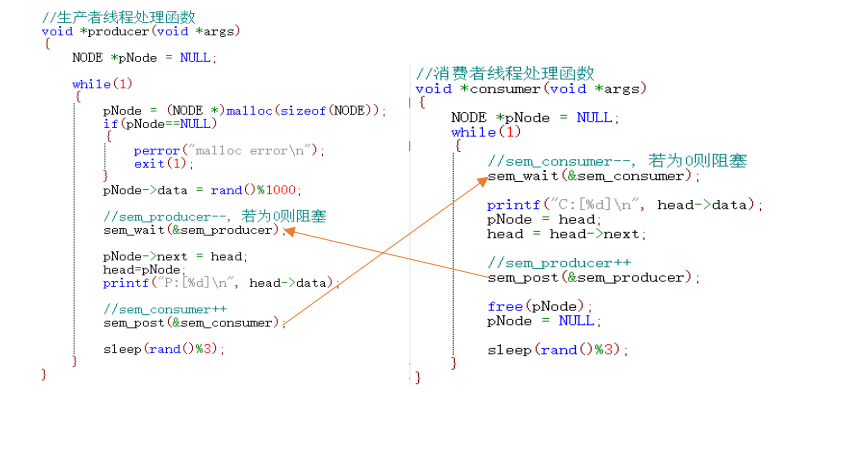
1
2
3
4
5
6
7
8
9
10
11
12
13
14
15
16
17
18
19
20
21
22
23
24
25
26
27
28
29
30
31
32
33
34
35
36
37
38
39
40
41
42
43
44
45
46
47
48
49
50
51
52
53
54
55
56
57
58
59
60
61
62
63
64
65
66
67
68
69
70
71
72
73
74
75
76
77
78
79
80
81
82
83
84
85
86
87
88
89
90
91
92
93
94
95
96
97
98
99
100
101
102
103
104
105
106
107
108
109
|
#include <stdio.h>
#include <stdlib.h>
#include <string.h>
#include <sys/types.h>
#include <unistd.h>
#include <pthread.h>
#include <semaphore.h>
typedef struct node
{
int data;
struct node *next;
}NODE;
NODE *head = NULL;
sem_t sem_producer;
sem_t sem_consumer;
void *producer(void *arg)
{
NODE *pNode = NULL;
while(1)
{
pNode = (NODE *)malloc(sizeof(NODE));
if(pNode==NULL)
{
perror("malloc error");
exit(-1);
}
pNode->data = rand()%1000;
printf("P:[%d]\n", pNode->data);
sem_wait(&sem_producer);
pNode->next = head;
head = pNode;
sem_post(&sem_consumer);
sleep(rand()%3);
}
}
void *consumer(void *arg)
{
NODE *pNode = NULL;
while(1)
{
sem_wait(&sem_consumer);
printf("C:[%d]\n", head->data);
pNode = head;
head = head->next;
sem_post(&sem_producer);
free(pNode);
pNode = NULL;
sleep(rand()%3);
}
}
int main()
{
int ret;
pthread_t thread1;
pthread_t thread2;
sem_init(&sem_producer, 0, 5);
sem_init(&sem_consumer, 0, 0);
ret = pthread_create(&thread1, NULL, producer, NULL);
if(ret!=0)
{
printf("pthread_create error, [%s]\n", strerror(ret));
return -1;
}
ret = pthread_create(&thread2, NULL, consumer, NULL);
if(ret!=0)
{
printf("pthread_create error, [%s]\n", strerror(ret));
return -1;
}
pthread_join(thread1, NULL);
pthread_join(thread2, NULL);
sem_destroy(&sem_producer);
sem_destroy(&sem_consumer);
return 0;
}
|